
RustFS on Cloudron: Apache 2.0, Rust-native S3 storage built as a drop-in MinIO replacement
-
-
- Main Page: https://rustfs.com
-
- Licence: Apache 2.0
-
- Dockerfile: Yes (
Dockerfile,Dockerfile.glibc,Dockerfile.source, plusdocker-compose.ymland an official image atrustfs/rustfs:latest)
- Dockerfile: Yes (
-
- Demo: https://play.rustfs.com
-
-
- Summary:
-
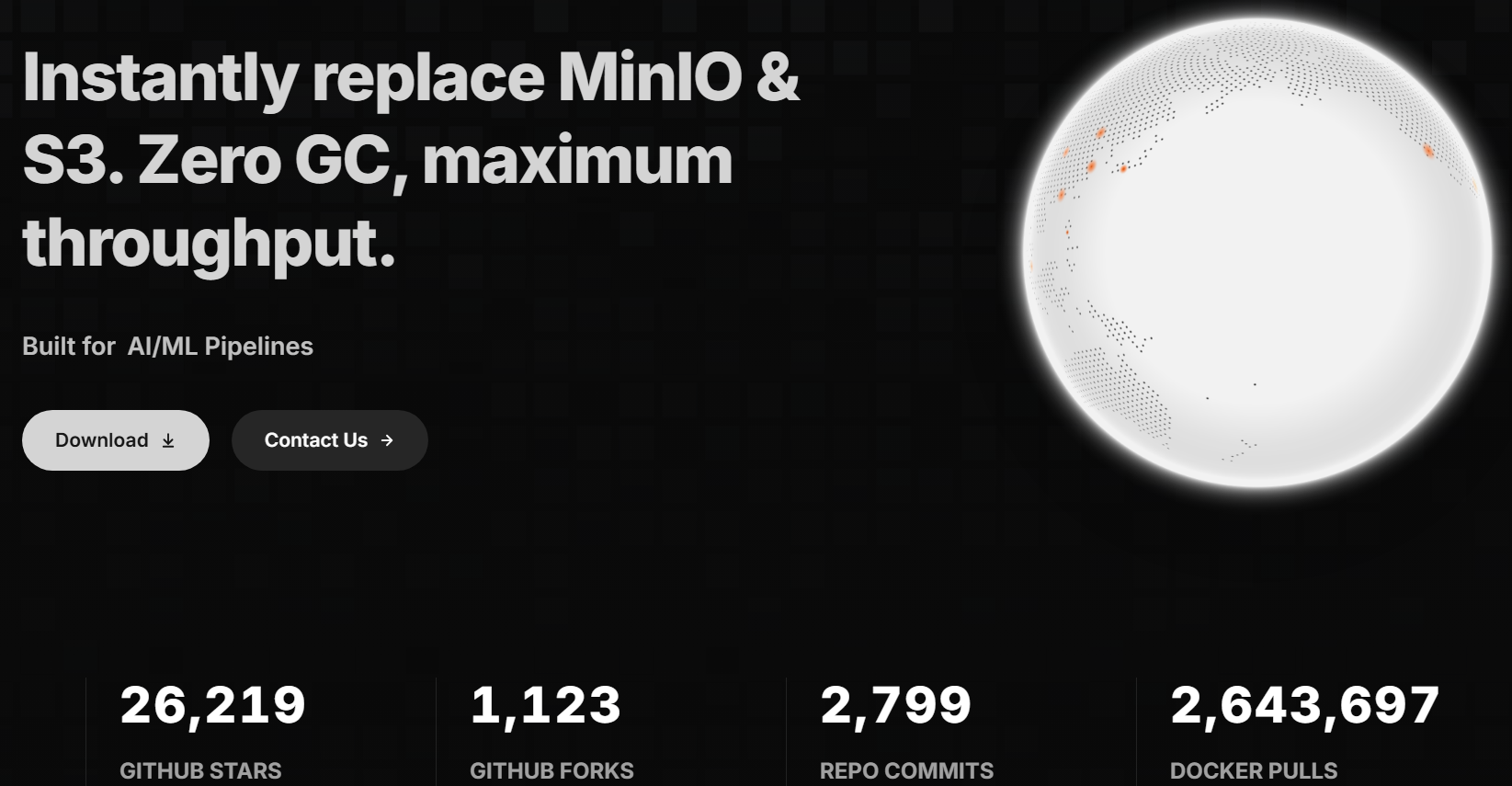
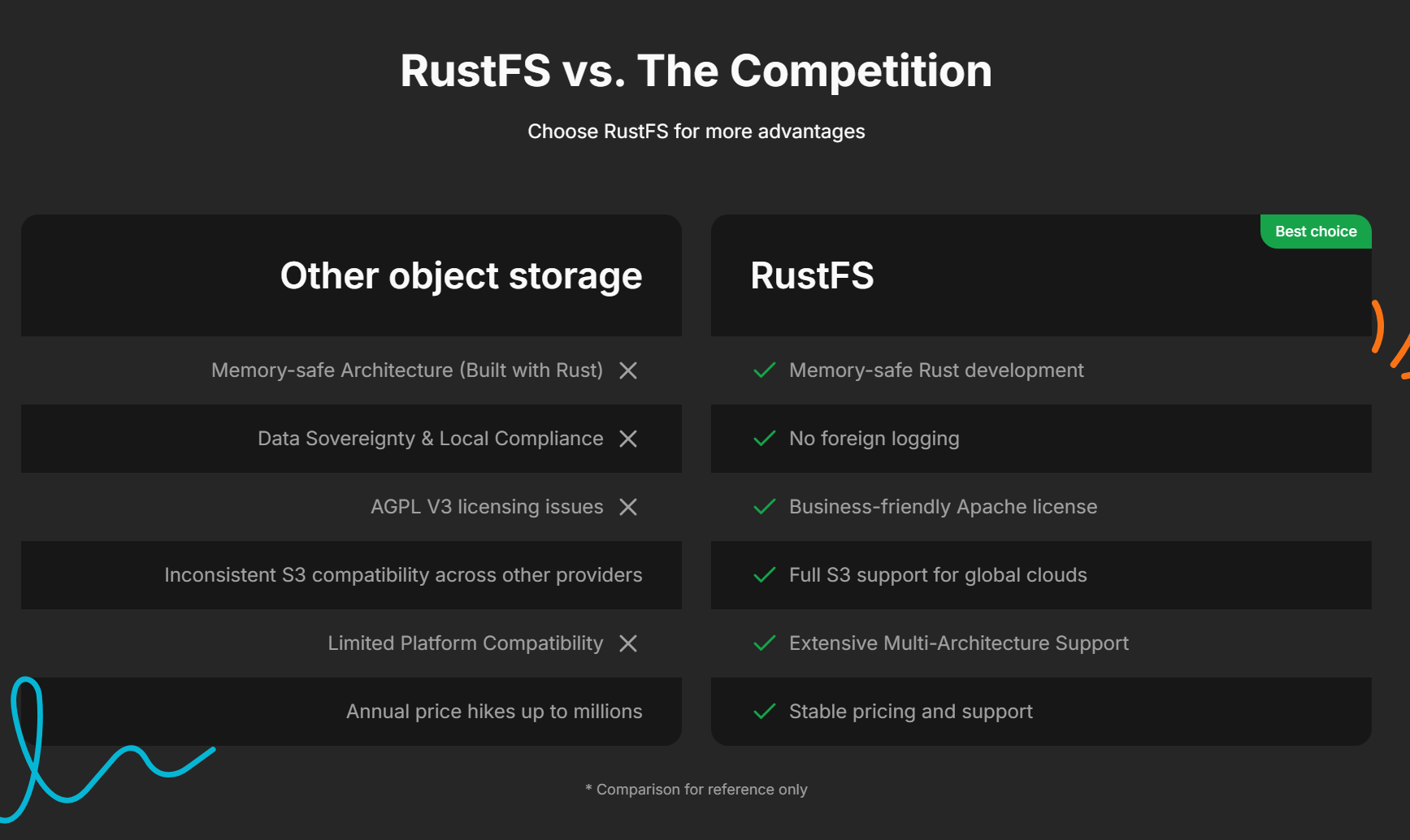
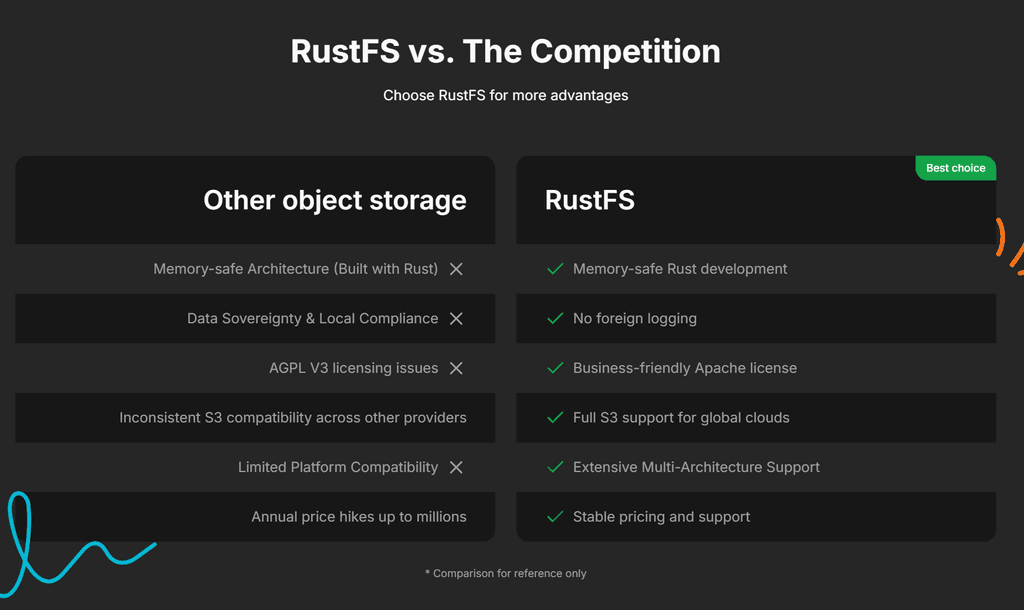
RustFS is a high-performance, S3-compatible distributed object storage system written almost entirely in Rust (98%+ of the codebase). It is positioned explicitly as a drop-in replacement for MinIO, with binary-level migration compatibility documented by the upstream team, and it is one of the few serious contenders in this space released under a permissive Apache 2.0 licence rather than AGPL v3.
-
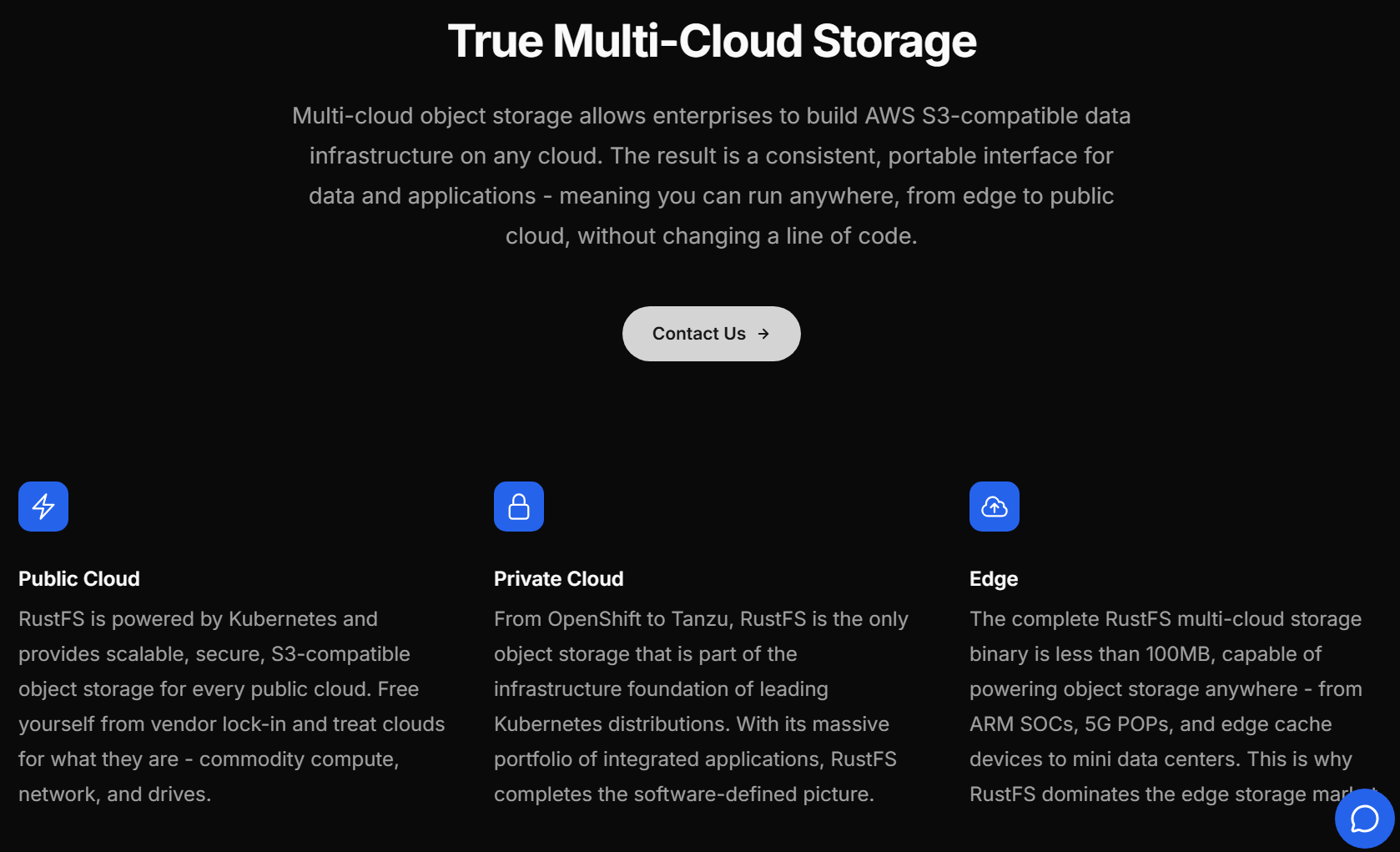
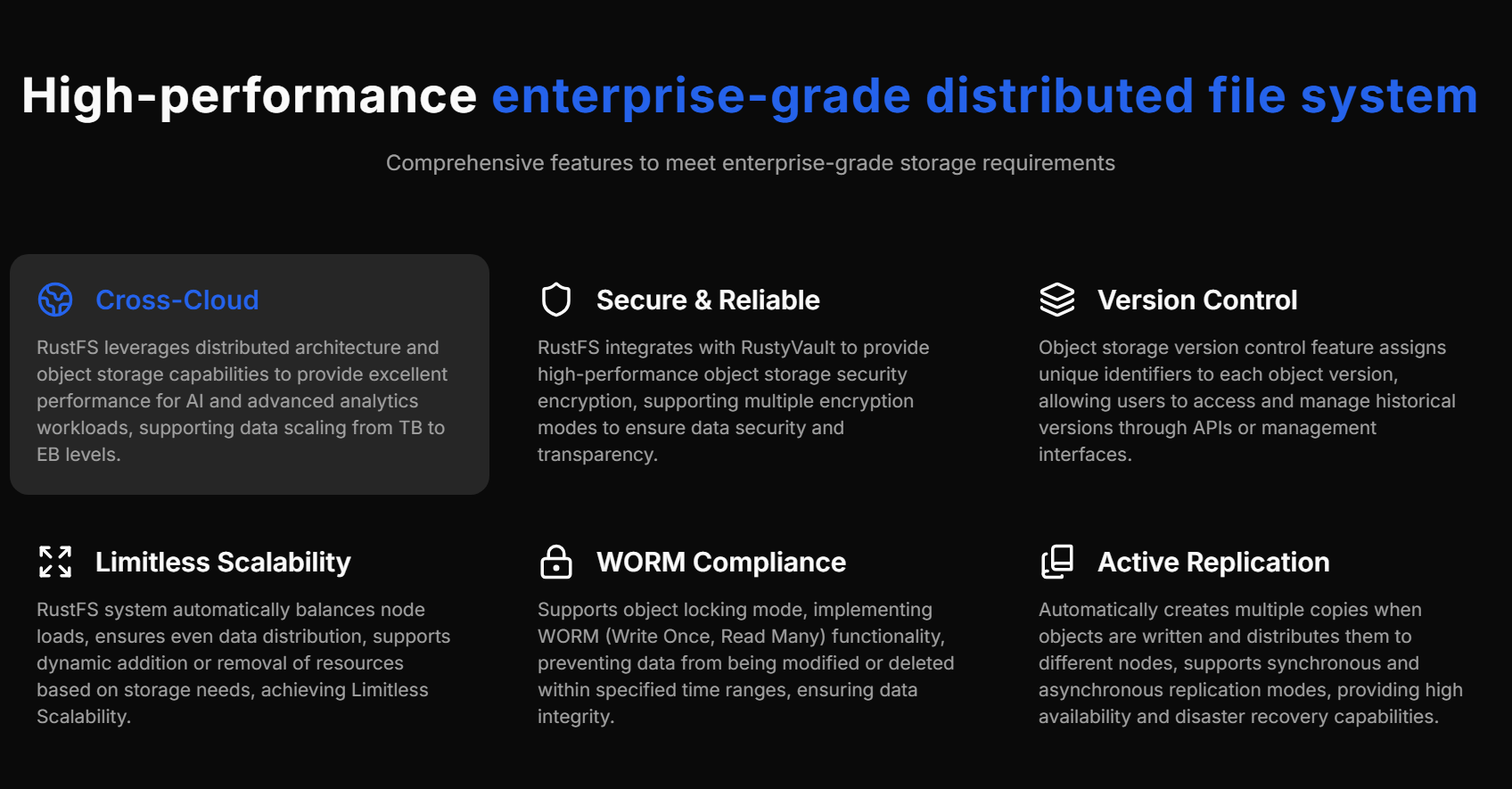
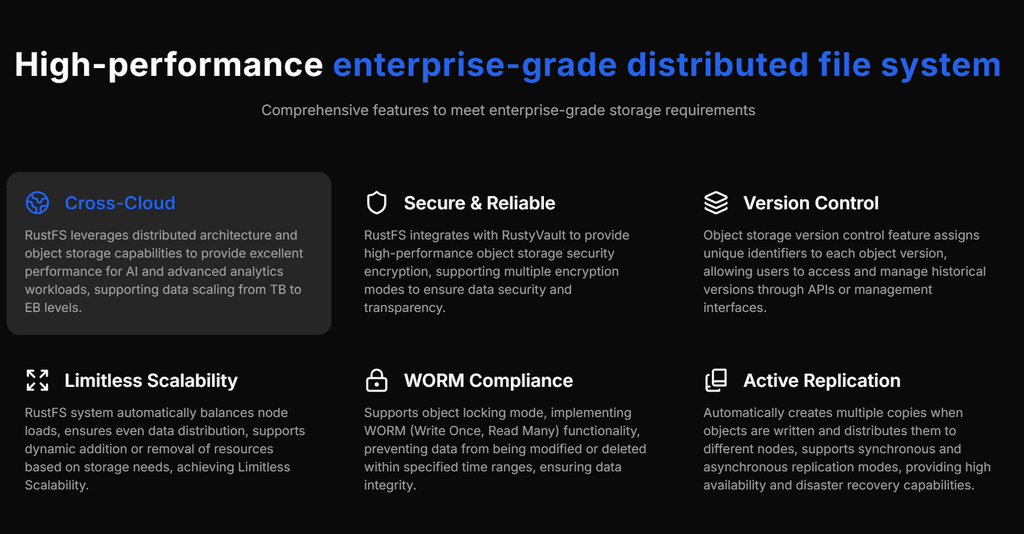
The project ships single-node and distributed modes, full S3 core API coverage, versioning, bucket replication, bitrot protection, WORM object locking, event notifications, server-side encryption via RustyVault, and a web console on port 9001 with the S3 API on port 9000. Lifecycle management, distributed mode polish, and the RustFS KMS are currently marked as under testing. Helm charts, a Nix flake, and multi-architecture Docker images (linux/amd64, linux/arm64) are all provided upstream, so Cloudron packaging should be reasonably straightforward.
-
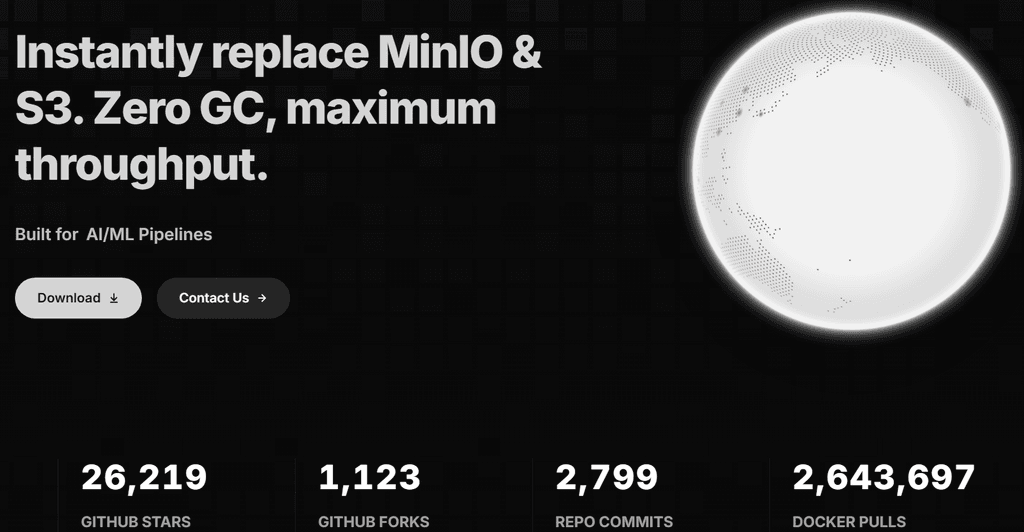
Momentum is real: 21.3k GitHub stars, 924 forks, 91 contributors, 2,306 commits, 83 tags, and the project was recently accepted into the NVIDIA Inception Program (April 2026) and featured in the Runa Capital ROSS Index Q4 2025 fastest-growing open-source startups list.
-
-
- Notes:
-
Why this matters for Cloudron now: MinIO's community edition effectively stopped receiving features and has gone into maintenance mode, with the upstream GitHub repository archived in February 2026. The Cloudron MinIO package maintainer has already advised users not to auto-update and to plan migrations. Garage is the other open source alternative currently being packaged by the community, but it is AGPL v3 and its two community packages are not yet in the official store. SeaweedFS is the pragmatic official option today (Apache 2.0, already packaged), but RustFS is the most direct functional replacement for MinIO specifically, which matters for anyone with existing tooling,
mcmuscle memory, or apps configured against a MinIO endpoint. -
Licence advantage: Apache 2.0 is a genuine differentiator. Anyone packaging Cloudron apps or wrapping object storage into a downstream product avoids AGPL reciprocity obligations entirely, which is not the case with Garage or with AGPL-era MinIO.
-
Concerns worth flagging honestly:
-
- Still alpha. Current releases are tagged
v1.0.0-alpha.*(alpha.76 at time of writing). The upstreamFeature & Statustable marks distributed mode, lifecycle management, and KMS as under testing. This is a staging-first, production-soon project.
- Still alpha. Current releases are tagged
-
- Security posture has been a topic of concern: a hardcoded static token CVE was disclosed earlier (see the project's GitHub security advisories), and the initial CLA was criticised as overreaching. The team has since revised the CLA to a standard License Grant model where contributors retain ownership, and they have publicly committed to keeping the core repository permanently open source. Worth reading the security advisories tab before deploying.
-
- Marketing copy on rustfs.com leans hard and has some translation artefacts. The actual engineering, reflected in the GitHub repo and commit activity, is significantly more substantial than the marketing suggests.
-
Packaging effort estimate: Low to moderate. Official multi-arch Docker images, a published
docker-compose.yml, a helm chart at charts.rustfs.com, and a standard two-port exposure model (9000 API, 9001 console) make this a straightforward Cloudron packaging target. Default credentials arerustfsadmin/rustfsadminand should be rotated at first boot via env vars. Persistent paths are/dataand/logswith a non-root UID of 10001. Backup-wise, the data and logs directories are the full surface area for a single-node install. -
Given the MinIO situation, having RustFS alongside SeaweedFS in the Cloudron store would give self-hosters a clear Apache 2.0 migration path for existing MinIO workloads without waiting for the Garage community packages to mature.
-
-
- Alternative to / Libhunt link:
-
- AlternativeTo: https://alternativeto.net/software/rustfs/
-
- Libhunt: https://www.libhunt.com/r/rustfs
-
- Listed as a MinIO alternative on: https://www.libhunt.com/r/minio
-
- Screenshots / brand logo:
-
- Live demo console: https://play.rustfs.com
-
- Performance demo video and architecture diagrams in the upstream README: https://github.com/rustfs/rustfs#readme
-
- Brand logo and homepage screenshots: https://rustfs.com

-
-
 N nebulon marked this topic as a question on
-
N nebulon has marked this topic as solved on
Hello! It looks like you're interested in this conversation, but you don't have an account yet.
Getting fed up of having to scroll through the same posts each visit? When you register for an account, you'll always come back to exactly where you were before, and choose to be notified of new replies (either via email, or push notification). You'll also be able to save bookmarks and upvote posts to show your appreciation to other community members.
With your input, this post could be even better 💗
Register Login