🚀 Cognee on Cloudron - Community Package now available
-
TL;DR: Cognee turns documents into a knowledge graph plus a vector index that your agents can query. It is now packaged for Cloudron, runs with no API key out of the box, and takes any OpenAI-compatible model when you want answers as well as search. Unofficial and community-maintained.
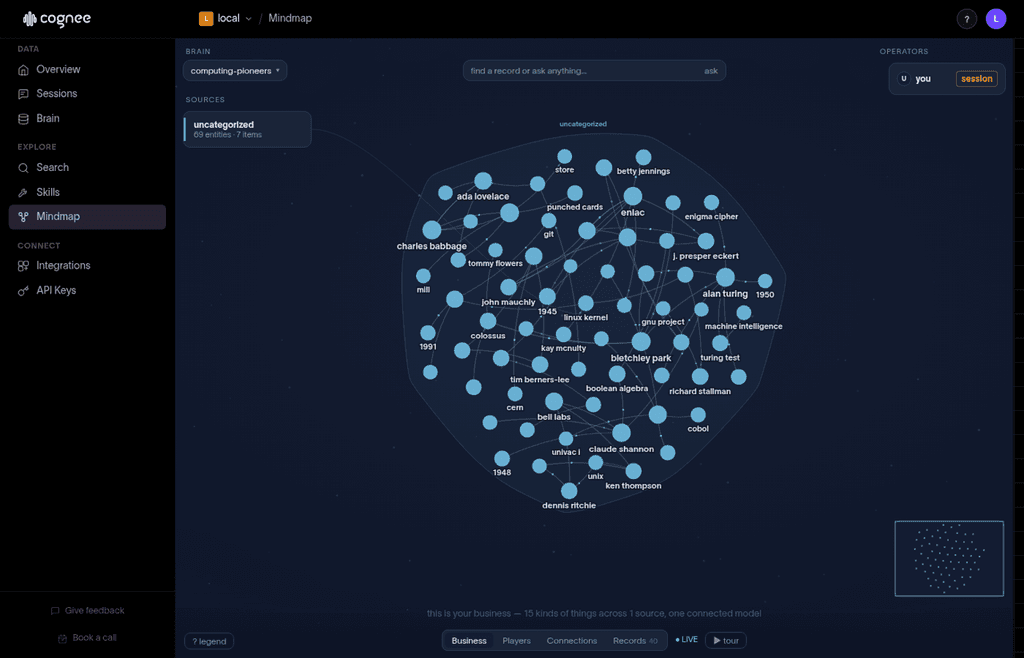
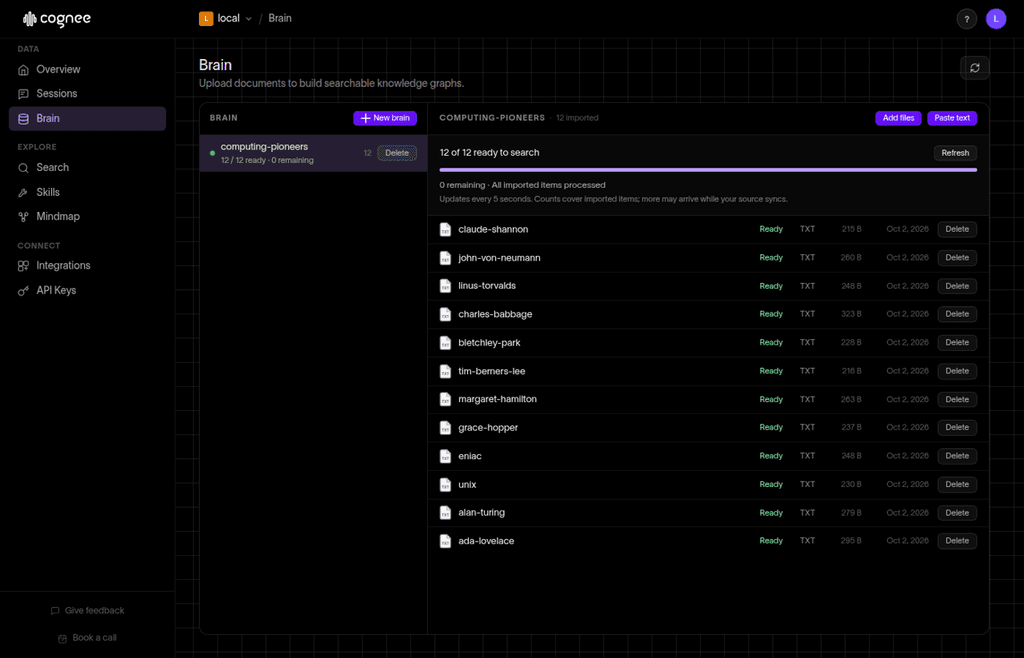
Headline features
- Add documents in the web interface or over the REST API, build a graph with one call, then search by chunk, by graph, or by asking a question.
- Works with no API key: a small local model extracts entities and another embeds the text, both downloaded the first time they are needed.
- Bring your own model when you want richer graphs and answer-style search: any OpenAI-compatible chat endpoint and embedding endpoint, set through the app's environment.
- Safe defaults: self-registration closed, telemetry off, signing secrets and the administrator password generated once and kept in the data directory.
- The downloaded models live outside the backups, so a backup stays small. A restored app fetches them again on first use.
Links
- Project homepage: https://www.cognee.ai
- Upstream repo: https://github.com/topoteretes/cognee
- Cloudron package repo: https://github.com/OrcVole/cognee-cloudron
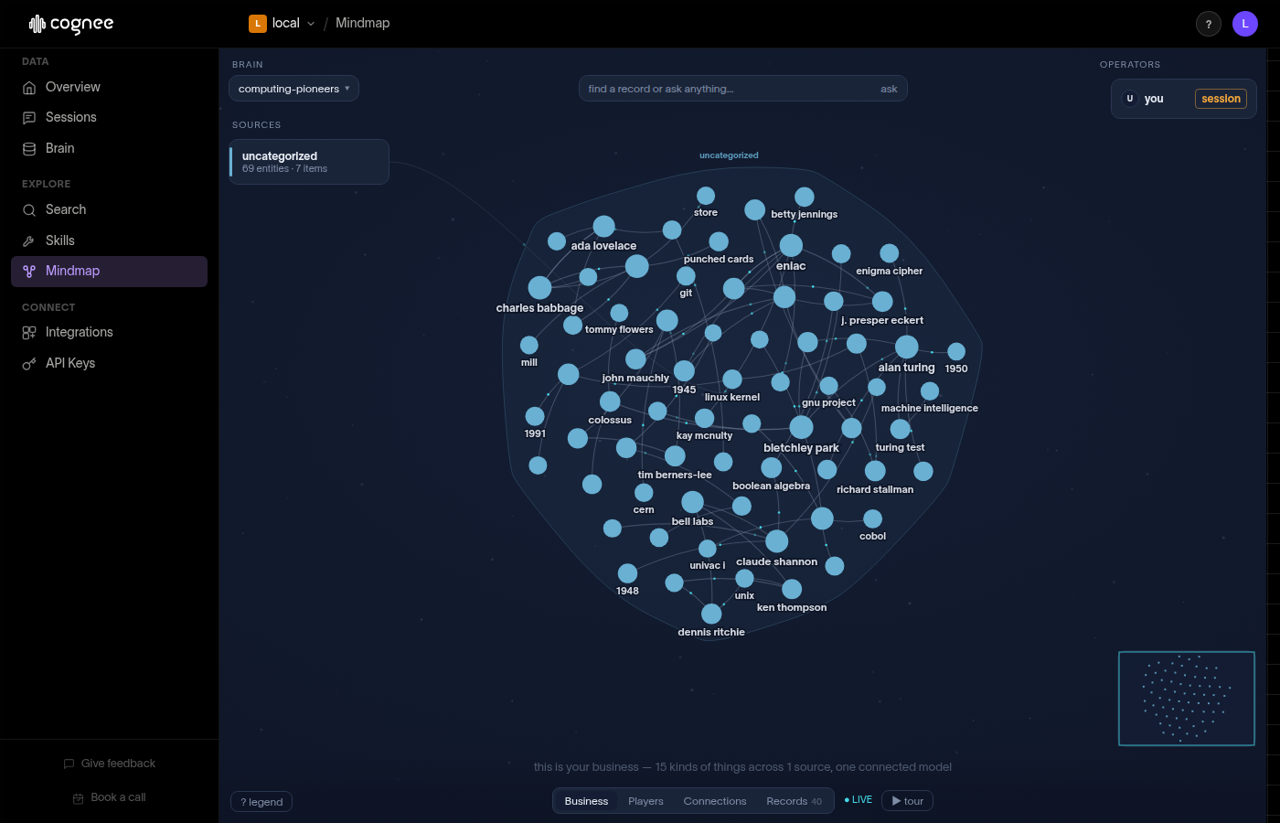
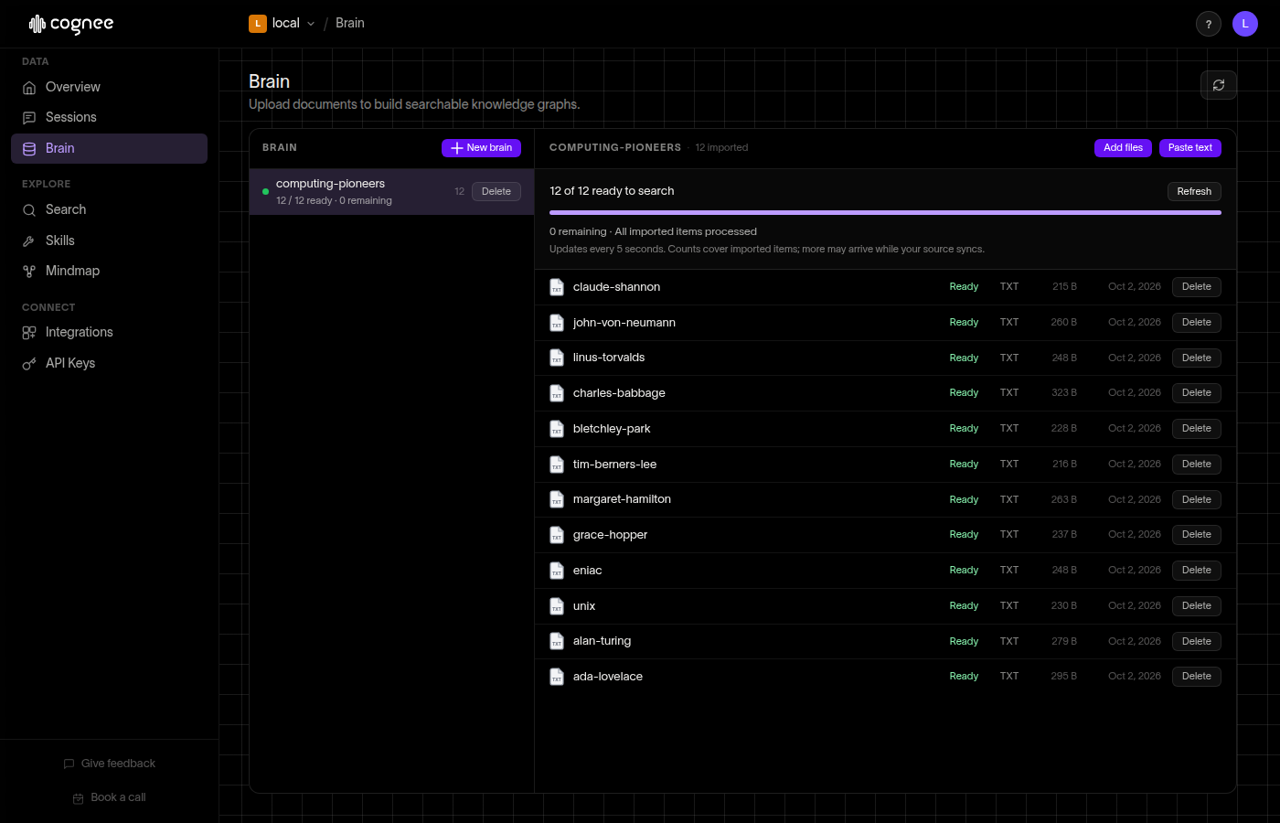
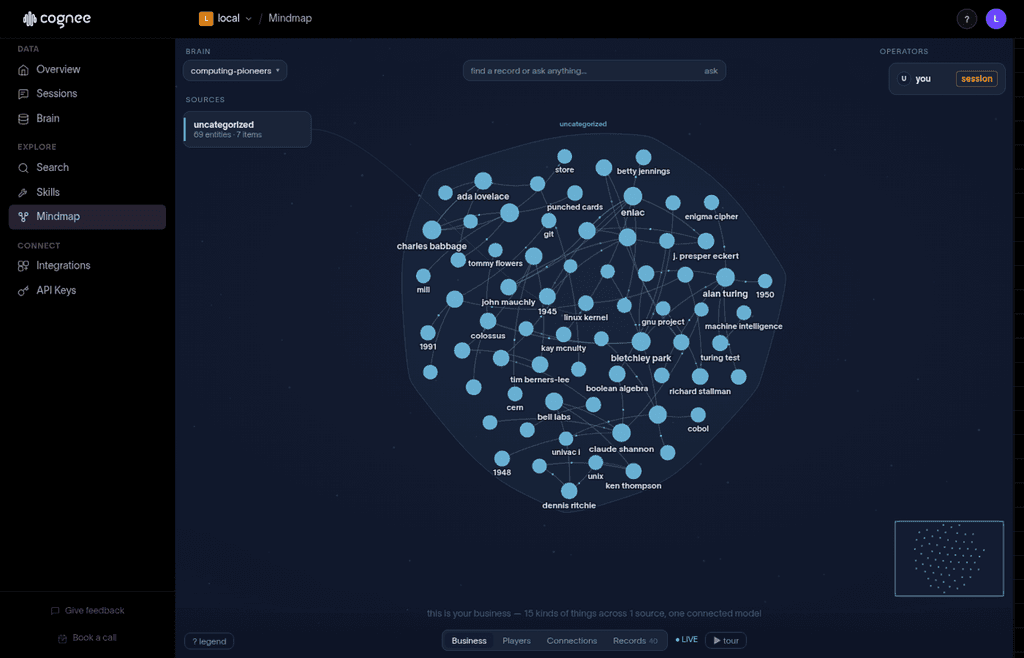
This package runs upstream release 1.6.2 with its own web interface (the Brain, Search and Mindmap pages are the useful ones).
How to install
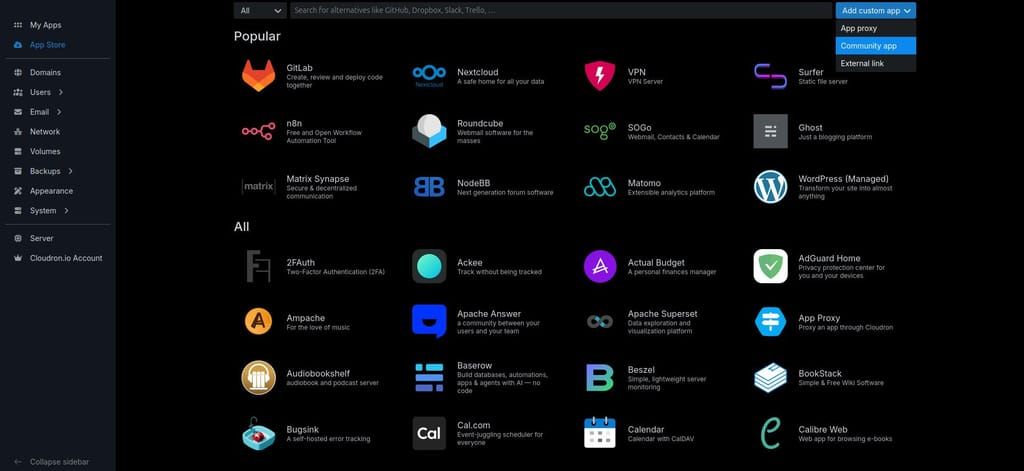
The easiest way is the dashboard: click the Add custom app dropdown (top right in the App Store), choose Community app, and paste the CloudronVersions.json URL below into the box. Apps installed this way receive automatic updates.
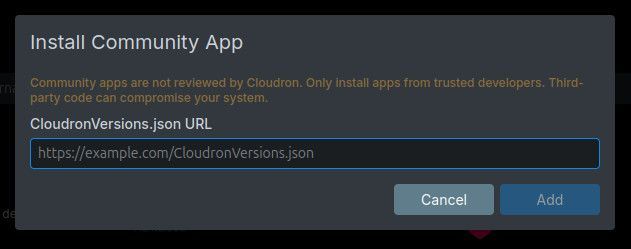
https://raw.githubusercontent.com/OrcVole/cognee-cloudron/main/CloudronVersions.jsonOr with the CLI:
cloudron install \
  --versions-url https://raw.githubusercontent.com/OrcVole/cognee-cloudron/main/CloudronVersions.json \
  --location cognee.example.com
Minimums: Cloudron 10.0.0 or newer. The memory limit defaults to 8 GiB, because the two local models stay in memory once loaded. With a language model and an embedding endpoint configured the app needs far less, and you can lower the limit in the dashboard. Addons: localstorage and postgresql. No extra subdomain.
First run: sign-in is by email and password, because Cognee has no single sign-on. The post-install checklist asks you to set a real administrator address, and the generated password is in the data directory as described in the post-install note. There is no mail, so no password reset by email.
For users
Why try it: agents forget. Cognee keeps what they have read as a graph of entities and relationships plus a vector index, so they can recall facts and how they relate. You get the web interface, an API key page for your agents, and the Cloudron basics: automatic backups, one-click updates and a certificate. Good fit if you want a private memory layer next to your other apps. Probably not if you need single sign-on or mail.
For packagers: what we learned
What helped: the platform's PostgreSQL addon covers the relational store, and
persistentDirsis exactly right for a model cache you do not want in backups.What was tricky: the extraction runtime has to be installed at build time because installing it at runtime fails on a read-only filesystem. The front proxy must pass the original Host header including the port, or the interface's server actions fail behind the platform proxy. With the local models loaded the app needs about 5 GB, and a 4 GiB limit was never killed but swapped heavily, so look at the limit-hit counter and not only at out-of-memory kills.
Still rough: a cold install from the community store on a fresh subdomain is the thing we would most like confirmed by someone else.
For the Cloudron team
Maintenance burden: upstream releases often; the package is thin, with the version pinned in one place. Why it suits the store: agent memory is a gap among the community apps, and Cognee completes a stack with an LLM server and an embedding server. Friction worth knowing: the dashboard does not show a memory limit being hit repeatedly when swap absorbs the overflow, and the CLI has no memory-limit flag for a standing app.
For Cognee's developers
Thank you for an Apache-licensed project that runs without a key. A few low-effort asks would help anyone packaging it: an environment variable for the extraction model name, a note that the embedding cache defaults to a temporary directory, and a switch to disable the register route. Package source and pull requests are welcome.
Unlocks
Now you can keep a private knowledge graph of your own documents on your own Cloudron, queried by any agent that speaks to a REST API.
Synergies
- Cognee + Text Embeddings Inference, or TEI: point Cognee's embeddings at a TEI install, so embeddings are served by a shared service rather than loaded inside the app.
- Cognee + Langfuse: send Cognee's model calls to a Langfuse project to see every extraction call and its cost.
- Cognee + vLLM, Ollama, Open WebUI or LibreChat: any of their OpenAI-compatible endpoints can be the language model for extraction and answers.
- Cognee + Docling: convert PDFs and office files to text with Docling, then add them to a Cognee dataset.
Feedback, bug reports, and "works on my install" confirmations are all welcome.
-
TL;DR: Cognee turns documents into a knowledge graph plus a vector index that your agents can query. It is now packaged for Cloudron, runs with no API key out of the box, and takes any OpenAI-compatible model when you want answers as well as search. Unofficial and community-maintained.
Headline features
- Add documents in the web interface or over the REST API, build a graph with one call, then search by chunk, by graph, or by asking a question.
- Works with no API key: a small local model extracts entities and another embeds the text, both downloaded the first time they are needed.
- Bring your own model when you want richer graphs and answer-style search: any OpenAI-compatible chat endpoint and embedding endpoint, set through the app's environment.
- Safe defaults: self-registration closed, telemetry off, signing secrets and the administrator password generated once and kept in the data directory.
- The downloaded models live outside the backups, so a backup stays small. A restored app fetches them again on first use.
Links
- Project homepage: https://www.cognee.ai
- Upstream repo: https://github.com/topoteretes/cognee
- Cloudron package repo: https://github.com/OrcVole/cognee-cloudron
This package runs upstream release 1.6.2 with its own web interface (the Brain, Search and Mindmap pages are the useful ones).
How to install
The easiest way is the dashboard: click the Add custom app dropdown (top right in the App Store), choose Community app, and paste the CloudronVersions.json URL below into the box. Apps installed this way receive automatic updates.
https://raw.githubusercontent.com/OrcVole/cognee-cloudron/main/CloudronVersions.jsonOr with the CLI:
cloudron install \
  --versions-url https://raw.githubusercontent.com/OrcVole/cognee-cloudron/main/CloudronVersions.json \
  --location cognee.example.com
Minimums: Cloudron 10.0.0 or newer. The memory limit defaults to 8 GiB, because the two local models stay in memory once loaded. With a language model and an embedding endpoint configured the app needs far less, and you can lower the limit in the dashboard. Addons: localstorage and postgresql. No extra subdomain.
First run: sign-in is by email and password, because Cognee has no single sign-on. The post-install checklist asks you to set a real administrator address, and the generated password is in the data directory as described in the post-install note. There is no mail, so no password reset by email.
For users
Why try it: agents forget. Cognee keeps what they have read as a graph of entities and relationships plus a vector index, so they can recall facts and how they relate. You get the web interface, an API key page for your agents, and the Cloudron basics: automatic backups, one-click updates and a certificate. Good fit if you want a private memory layer next to your other apps. Probably not if you need single sign-on or mail.
For packagers: what we learned
What helped: the platform's PostgreSQL addon covers the relational store, and
persistentDirsis exactly right for a model cache you do not want in backups.What was tricky: the extraction runtime has to be installed at build time because installing it at runtime fails on a read-only filesystem. The front proxy must pass the original Host header including the port, or the interface's server actions fail behind the platform proxy. With the local models loaded the app needs about 5 GB, and a 4 GiB limit was never killed but swapped heavily, so look at the limit-hit counter and not only at out-of-memory kills.
Still rough: a cold install from the community store on a fresh subdomain is the thing we would most like confirmed by someone else.
For the Cloudron team
Maintenance burden: upstream releases often; the package is thin, with the version pinned in one place. Why it suits the store: agent memory is a gap among the community apps, and Cognee completes a stack with an LLM server and an embedding server. Friction worth knowing: the dashboard does not show a memory limit being hit repeatedly when swap absorbs the overflow, and the CLI has no memory-limit flag for a standing app.
For Cognee's developers
Thank you for an Apache-licensed project that runs without a key. A few low-effort asks would help anyone packaging it: an environment variable for the extraction model name, a note that the embedding cache defaults to a temporary directory, and a switch to disable the register route. Package source and pull requests are welcome.
Unlocks
Now you can keep a private knowledge graph of your own documents on your own Cloudron, queried by any agent that speaks to a REST API.
Synergies
- Cognee + Text Embeddings Inference, or TEI: point Cognee's embeddings at a TEI install, so embeddings are served by a shared service rather than loaded inside the app.
- Cognee + Langfuse: send Cognee's model calls to a Langfuse project to see every extraction call and its cost.
- Cognee + vLLM, Ollama, Open WebUI or LibreChat: any of their OpenAI-compatible endpoints can be the language model for extraction and answers.
- Cognee + Docling: convert PDFs and office files to text with Docling, then add them to a Cognee dataset.
Feedback, bug reports, and "works on my install" confirmations are all welcome.
@LoudLemur I packaged EverOS which works in the same space as Cognee. I did look at Cognee but rejected it for some reason I cannot recall. Just out of interest, did you consider EverOS but preferred Cognee, if so for what reason ?
-
@LoudLemur I packaged EverOS which works in the same space as Cognee. I did look at Cognee but rejected it for some reason I cannot recall. Just out of interest, did you consider EverOS but preferred Cognee, if so for what reason ?
ust out of interest, did you consider EverOS but preferred Cognee, if so for what reason ?
Hi, Tim! Yes, we held EverOS in mind while we were considering whether to package Cognee and considered their relative strengths and overlap. It was ontology, mainly.
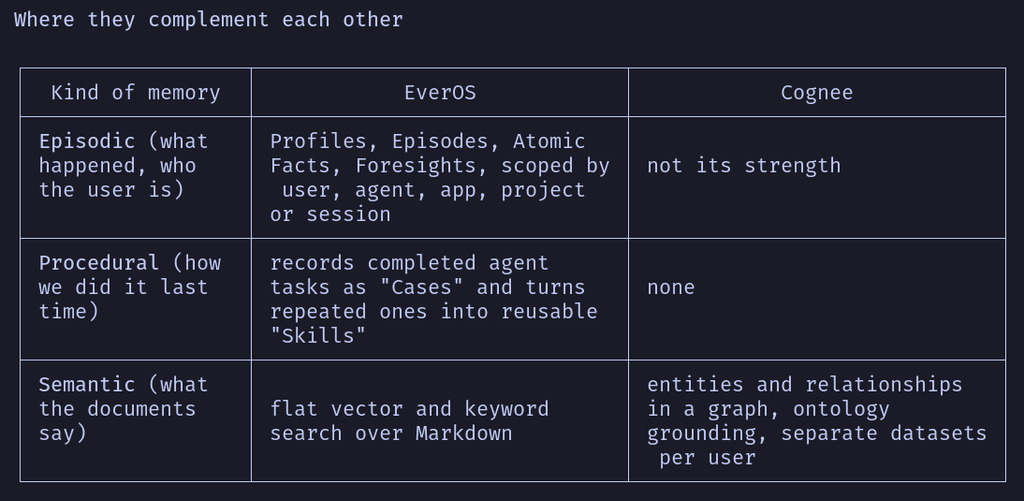
We read EverOS as a different tool in the same area rather than a substitute. As far as we could tell from its listing, it's agent memory: conversations and agent runs become Markdown memories (profiles, episodes, facts, and Cases that turn into reusable Skills), and you search them with vector and keyword search. What we were after was the other half: point it at a pile of documents, pull out the entities and relationships, and query the resulting knowledge graph. Nothing on either store did that extraction, and that's Cognee's job.
So it wasn't "Cognee instead of EverOS". If anything they look complementary: EverOS for what the agents and their users have done, Cognee for what the documents say. Since both write plain Markdown or take it over a REST API, a scheduled job could push the Skills and facts EverOS distils into Cognee and build them into the graph. That's an untried idea, not something we've done.
-
ust out of interest, did you consider EverOS but preferred Cognee, if so for what reason ?
Hi, Tim! Yes, we held EverOS in mind while we were considering whether to package Cognee and considered their relative strengths and overlap. It was ontology, mainly.
We read EverOS as a different tool in the same area rather than a substitute. As far as we could tell from its listing, it's agent memory: conversations and agent runs become Markdown memories (profiles, episodes, facts, and Cases that turn into reusable Skills), and you search them with vector and keyword search. What we were after was the other half: point it at a pile of documents, pull out the entities and relationships, and query the resulting knowledge graph. Nothing on either store did that extraction, and that's Cognee's job.
So it wasn't "Cognee instead of EverOS". If anything they look complementary: EverOS for what the agents and their users have done, Cognee for what the documents say. Since both write plain Markdown or take it over a REST API, a scheduled job could push the Skills and facts EverOS distils into Cognee and build them into the graph. That's an untried idea, not something we've done.
@LoudLemur thank you, helpful summary and selling points for Cognee.
Maybe that's why I didn't go with Cognee, as I have RAG coming out my ears on different systems. It's wrong mental process but I tend to skip over more RAG solutions - I should be more curious.
I'm sure Cognee will suit those who need (more) RAG.

Hello! It looks like you're interested in this conversation, but you don't have an account yet.
Getting fed up of having to scroll through the same posts each visit? When you register for an account, you'll always come back to exactly where you were before, and choose to be notified of new replies (either via email, or push notification). You'll also be able to save bookmarks and upvote posts to show your appreciation to other community members.
With your input, this post could be even better 💗
Register Login