Cloudron makes it easy to run web apps like WordPress, Nextcloud, GitLab on your server. Find out more or install now.


Skip to content
  • Categories
  • Recent
  • Tags
  • Popular
  • Bookmarks
  • Search
Skins
  • Light
  • Brite
  • Cerulean
  • Cosmo
  • Flatly
  • Journal
  • Litera
  • Lumen
  • Lux
  • Materia
  • Minty
  • Morph
  • Pulse
  • Sandstone
  • Simplex
  • Sketchy
  • Spacelab
  • United
  • Yeti
  • Zephyr
  • Dark
  • Cyborg
  • Darkly
  • Quartz
  • Slate
  • Solar
  • Superhero
  • Vapor

  • Default (No Skin)
  • No Skin
Collapse
Brand Logo

Cloudron Forum

Offical apps | Community apps | Demo | Docs | Install
A

AmbroiseUnly

@AmbroiseUnly
Unfollow Follow
About
Posts
90
Topics
20
Shares
0
Groups
0
Followers
0
Following
0

Posts

Recent Best Controversial

  • How to Read/Write local disk?
    A AmbroiseUnly
    N8N

    Figured it out.

    Note: I manually created a n8n-uploads folder in my case.

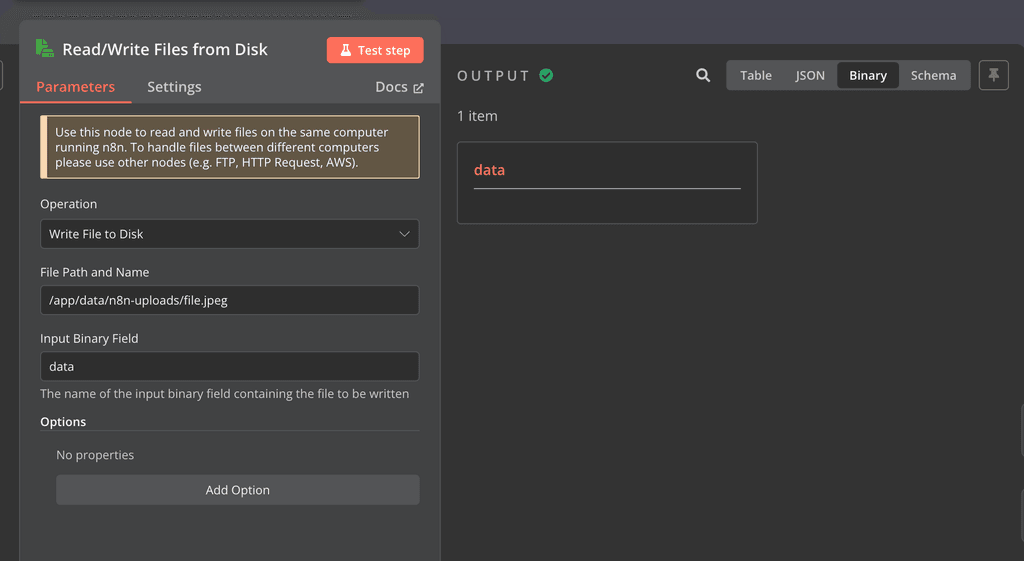
    In n8n, using the "Read/Write Files from Disk" action:

    • File Path and Name: /app/data/n8n-uploads/file.jpeg

    /app/data/file.jpeg works out of the box, but I wanted to store all my files in the same folder.

    image.png

    Here is a video:
    https://www.loom.com/share/5e6bccdbd19842a489cc10f90ea871d4


  • Madis on Cloudron - Open-source GDPR compliance management for DPOs
    A AmbroiseUnly
    App Wishlist
    • Main Page: https://madis.app/
    • Git: https://gitlab.adullact.net/soluris/madis
    • Licence: AGPL-3.0
    • Dockerfile: Yes (upstream repo includes Dockerfiles + docker-compose)
    • Demo: https://demo.madis.app/connexion

    Summary:
    Madis is an open-source web application developed by Soluris to help DPOs/DPDs and organizations manage GDPR compliance:

    • registers (processing activities, subprocessors, tools/media),
    • data subject requests & personal data breaches tracking,
    • questionnaires/evaluations and continuous improvement workflows.

    This would be a great fit for Cloudron users (especially EU orgs) who want a self-hosted, maintainable GDPR compliance tool.

    Notes:

    • I searched the forum for “Madis” and couldn’t find an existing request.
    • Tech stack (from upstream metadata / docs): PHP (Symfony) + Nginx + MySQL/MariaDB, plus NodeJS tooling for asset builds.
    • There are Docker artifacts upstream (Dockerfiles + docker-compose), which should make packaging easier.
    • Likely runtime dependencies: wkhtmltopdf is commonly used for PDF export in Madis install guides (worth confirming/including in the package).
    • Madis mentions SSO via OpenID on its website; if this is OpenID Connect, Cloudron SSO integration might be possible (or at least easy to connect to an external IdP).
    • Packaging thoughts:
      • Use Cloudron MySQL add-on for the database.
      • Persist any upload/storage directories + Symfony var/ data that must survive updates.
      • Provide a clean first-run experience (admin creation / initial config) if Madis doesn’t have an installer wizard.

    • Alternative to / Libhunt link: N/A (no obvious selfhosted alternative page found). Reference listing: https://comptoir-du-libre.org/fr/softwares/354
    • Screenshots: https://madis.app/ (homepage visuals) + demo login page: https://demo.madis.app/connexion


  • Guide: How to add monitoring to your Cloudron server for free (RAM/Disk/etc.), using Netdata (5mn setup)
    A AmbroiseUnly
    Discuss

    Edit: Added as a Community Guide : Monitoring and Alerting


    Motivations

    Since I started using Cloudron, I've had the same recurring pain point:
    It lacks a built-in monitoring and alerting system to help me anticipate and fix issues before they break things.

    Don't get me wrong, I love Cloudron and what it does. I just feel like it doesn't give us the best tools to avoid shooting ourselves in the feet regarding monitoring and best practices.

    I mean, just a guide (like this one) is all I was asking for, from the perspective of a web developer who needs to efficiently monitor my infrastructure. I needed to be given some strong foundation about how to do that, without having to experiment by myself tons of solutions.

    So, this guide aims to change that, and provide you with a 5mn guide to add monitoring to your Cloudron servers, with those goals in mind:

    • Simple to set up
    • Receive notifications when alerts occur
    • Handle multiple servers and centralize them
    • Freemium (starts for free, pay if you grow beyond limits)

    Solution - Using Netdata

    Netdata is the solution I retained for this, it ticked all my boxes, and was super simple to install.
    I tried Grafana first, and ugh, wasted 2-3h trying to understand how to do the setup, eventually succeeded, to finally fail to set up notifications.

    How to install in 5mn (step by step)

    Netdata steps are super simple:

    • Create a Netdata account
    • Add your first Node, select "Linux" (path: Deploy/Operating Systems/Linux)
    • Copy the command line provided (wget...)
    • Paste and execute the command line in the Linux server you want to monitor (basically, your Cloudron server), you'll need to connect to it first (using SSH, most likely)
    • Accept the various prompts (Netdata installs itself as a background service, and it nicely asks for your confirmation before doing that)
    • You're done, check your Netdata dashboard, the data will start flowing in immediately

    Video guide

    Here is a 10mn video guide covering the installation part, and also a demo about how the notification system works when an alert is triggered.
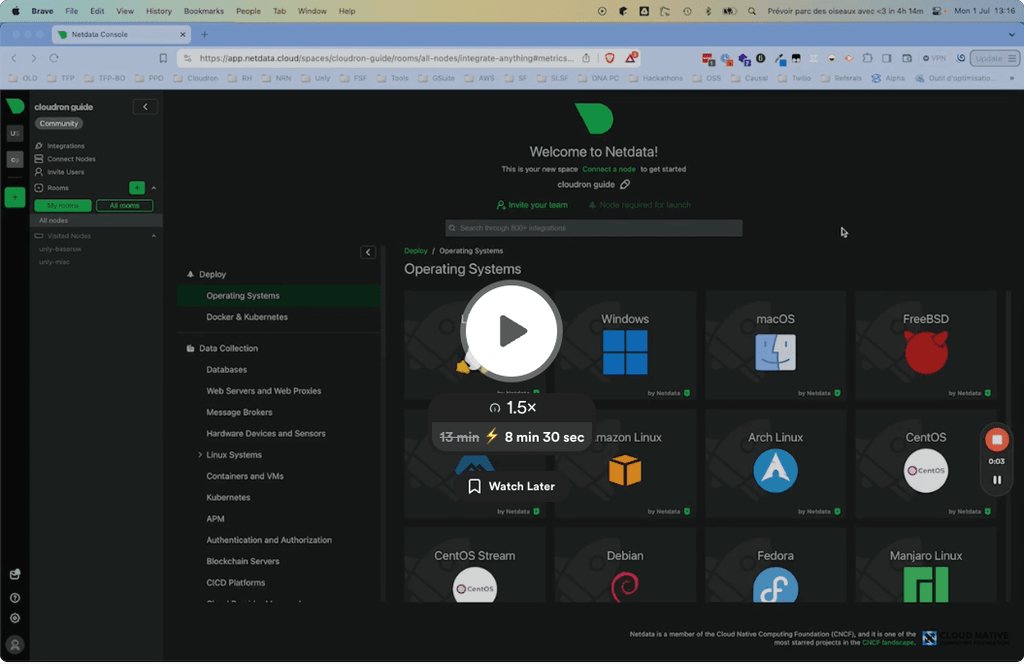
    Watch the video

    Other solutions

    Grafana

    Grafana is theoretically supposed to do the same thing as Netdata, it's OSS, too.
    But when it came to installing and configuring, I found the process so much harder (I kind of wish I had tried Netdata first).

    Eventually, I got stuck with the notification system and tried out Netdata, which was a pleasant surprise of simplicity and efficiency.

    Custom scripts

    Other members have proposed using custom bash scripts to handle the monitoring part.

    But I don't want to do that. I don't know what I don't know, and I for sure know I'm not a sysadmin expert, and I also know I don't want to become one.

    So, relying on scripts that I would need to install and maintain myself is a big no-go. I'm pretty sure I can't do as good of a job as a specialized tool. And, clearly, Netdata showed me I was on point about that.

  • Cloudron backup import failed - Not enough disk space, SSL certificate errors
    A AmbroiseUnly
    Support restore

    @girish said in Cloudron backup import failed - Not enough disk space, SSL certificate errors:

    @AmbroiseUnly said in Cloudron backup import failed - Not enough disk space, SSL certificate errors:

    When restoring a backup for an app, the restoration tool should first check whether the backup is available online

    When the backup is not found, the restore operation will fail and then you can try to restore again. But that's the theory... I guess it didn't work that way for you.

    That's how it works, it's just that it does numerous operations before fetching the backup, and thus failing a long time after beginning the import process, although it could fail right away, if it was fetching the backup earlier.

    Are you still facing any issues. I lost track of the exact situation since it's across many threads.

    Eventually, I imported it Dry Run mode and that worked well, I then updated the IP address myself and all is good now. The restore feature got broken because of some DNS stuff I still don't understand (was fetching DNS configuration from DigitalOcean instead of AWS Route53, for unknown reason)


  • Add Crypto Tracker
    A AmbroiseUnly
    App Wishlist

    https://taoteh1221.github.io/
    https://github.com/taoteh1221/Open_Crypto_Tracker

    Seems to be a good tool, completely open source (and free) to configure various things about crypto, including alerting of crypto markets (which are paid features in most places).

    Just for alerts, this tool would be useful. But it does a lot of other things which might interest even more people.
    It also runs on Raspberry PI.


  • AI on Cloudron
    A AmbroiseUnly
    Discuss a.i

    Is there any plan on adding AI-based projects to Cloudron?

    I'm asking because I wanted to build something with OpenAI, and got stuck because the OpenAI API doesn't allow browsing the internet (unlike ChatGPT), which came as a surprise, and I'm looking to use a self-hosted solution instead.


  • 2fauth - simple self host for 2fa keys
    A AmbroiseUnly
    App Wishlist

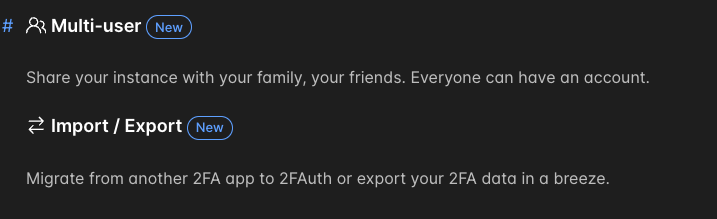
    On GitHub it still says "single user", but the https://docs.2fauth.app/ has been updated indeed.

    image.png


  • Guide: How to add monitoring to your Cloudron server for free (RAM/Disk/etc.), using Netdata (5mn setup)
    A AmbroiseUnly
    Discuss

    MR done


  • n8n - Self-hosted AI Starter Kit
    A AmbroiseUnly
    Discuss

    The Self-hosted AI Starter Kit is an open-source template that quickly sets up a local AI environment. Curated by n8n, it provides essential tools for creating secure, self-hosted AI workflows.

    https://github.com/n8n-io/self-hosted-ai-starter-kit

    I believe this could be very interesting to support. n8n is already supported, but this tool seems like a completely different tool, with more pieces.

    Already supports Docker Compose, so it seems it could be possible to add it as a new Cloudron App.

    I'd typically want to spawn a new server and start testing things without bothering with all the installation details.

    Also, providing some tips about optimizing its performances (using "Nvidia GPU") would be very helpful when selecting the server to host this app. I believe Cloudron might have a few partnerships with Cloud providers to help us pick a good choice for improved performances out of the box.


  • How do you handle (auto/manual) updating apps with confidence?
    A AmbroiseUnly
    Discuss

    @fbartels said in How do you handle (auto/manual) updating apps with confidence?:

    @joseph said in How do you handle (auto/manual) updating apps with confidence?:

    based on the update schedule

    Which just to have it said, could be adjusted to install a new version every hour.

    https://docs.cloudron.io/updates/#update-schedule


  • Baserow instance crashed unexpectedly - postgres : FATAL: too many connections for database
    A AmbroiseUnly
    Baserow

    For anyone interested in configuring proper monitoring on your Cloudron server, I wrote a guide about it, and I hope you'll find it useful! 🙂

    I wished when this issue happened that I had been warned before the disk ran out of space, and that's what monitoring is for.


  • Postgre DB is big (20+GB) - How can I understand what's stored there?
    A AmbroiseUnly
    Baserow postgresql

    Postgresql contain 21 GB of data on my Cloudron server that only has a single app: Baserow

    The baserow database itself only contains around a hundred records, nothing huge.
    So, I wonder why the postgresql on that server is so huge. Can I login to it and navigate the PG DB directly? Or is there another simpler/smarter way to understand what's being stored there?

    $ du -h --max-depth=1
    21G	./postgresql
    84K	./addons
    197M	./mysql
    20K	./oidc
    518M	./mongodb
    136K	./nginx
    4.0K	./tls
    16K	./logrotate.d
    4.0K	./cifs
    12K	./backup
    4.0K	./acme
    4.0K	./sshfs
    236K	./update
    8.0K	./diskusage
    24K	./sftp
    524K	./redis
    207M	./logs
    4.0K	./firewall
    12K	./collectd
    48M	./graphite
    22G	.
    

  • Emailing notifications of certain crucial system events, such as full disk space
    A AmbroiseUnly
    Feature Requests notifications

    I also encountered "disk full" issue, and I was quite dumbfounded there was no email notification for this, that seems pretty basic as far as monitoring goes.

    Cloudron is well-placed to add this functionality, and it would save us so much headaches.


  • 2FAuth is now available
    A AmbroiseUnly
    Announcements

    Great! I see it's currently marked as "Unstable", I'll wait for a stable version, but definitely interested in this (I also need to migrate from Authy...)


  • You can change the username but not the password
    A AmbroiseUnly
    Grafana

    @marcusquinn Thanks for this, I couldn't find any way to authenticate to my Grafana instance before reading your post.

    The Grafana Cloudron app documentation is lacking basic information such as admin/admin for logging in admin user. I searched for it for too long before getting lucky here. It wasn't part of the post-install guidelines as usual (or I missed it)

    https://docs.cloudron.io/apps/grafana/


  • Idea: Reserve data disk to be cleared upon emergency "Disk full"
    A AmbroiseUnly
    Discuss

    I've met quite a lot of "disk full" issues recently, and I'm not alone (thankfully).

    I wonder about the benefits for Cloudron to optionally reserve part of the disk with "fake data", essentially locking away a bit of the space available in the main hard drive.
    That might sound dumb, but it has benefits.

    The main goal of such a feature would be to avoid the situation where:

    • There is no disk space left
    • We can't get back any, as we don't know what data we could delete
    • Or, we know what data could be deleted, but to do so we need to be able to write a tiny bit first (like what happened there)
    • Due to the disk being full, we have very little flexibility about what we can do, and simple solutions are out of our reach

    From experience, it's very hard to recover from that issue when the disk is fully saturated, unless you know exactly what data can be removed safely and how to do it, or can rescale your server on the fly. You usually learn about them while trying to fix the whole thing.

    By having Cloudron users have their disk being full a bit faster, it helps discover the "Disk full" issue a bit faster, too.
    But, when the disk is really full, and we don't know what to delete, we are really stuck. We can't even do a clean stop of active apps and run a Cloudron backup of the system, because there is no more disk space to do so.

    On the other hand, by locking away a bit of the disk (enough to allow performing ops, and not too much not to be a hindrance), and releasing it upon request, it gives Cloudron the ability to:

    • Crash as usual when the disk is full
    • Admin becomes aware of the "disk full" issue (usually not immediately, but when online services stop working)
    • Admin can use "Release unused disk space" (the new feature I'm talking about)
      • We might also provide a few strategy tips there, such as stopping the apps, release and then do a backup
    • Cloudron releases some space by removing its "reserve"
    • Disk is no longer entirely full and Admin can now run some operations, such as:
      • Run a Cloudron Backup
      • Restart the apps (if they were stopped or errored due to no disk space left)

    This solution could provide both awareness of the root issue, and enough time/space to find a proper solution while continuing operations.

    Typically, for a server of 40GB, I would imagine a "reserve" of 1-5GB, configurable by Admin, 1Gb could be the default. It's essentially a way of asking our future self about "how much time/space do you want to have to find a proper solution, once you've figured out you didn't anticipate your disk being saturated and have to rely on the reserve, before you run out of space again".

    In a way, it's a bit like how cars work. They don't just suddenly stop when you run out of oil, they don't stop at all, but they vehemently signal you that you're on the reserve and need a refill real quick. Cloudron doesn't have a native monitoring system about the hard drive, but could give us an alternative that isn't as complex to implement.


  • Cloudron should make it clearer when any UI action will cause a restart
    A AmbroiseUnly
    Feature Requests

    Yesterday, I mistakenly restarted an App by changing the allocated max CPU.

    I hadn't planned on restarting the app at this time, and Cloudron didn't give me any hint about what would cause this change.

    I believe the Cloudron UI should always prompt for a User confirmation whenever an action will trigger a restart (App restart, whole Instance restart), as it seems to be a best practice to avoid shooting ourselves in the feet.


  • You can change the username but not the password
    A AmbroiseUnly
    Grafana

    I think I probably closed the modal too quickly and missed that. And then I couldn't find it back.
    I'm not on Cloudron 8 yet, but good to know discovery has been improved!

    Taking note of the "First Time Setup", I hadn't known that was there!


  • Guide: How to add monitoring to your Cloudron server for free (RAM/Disk/etc.), using Netdata (5mn setup)
    A AmbroiseUnly
    Discuss

    @necrevistonnezr said in Guide: How to add monitoring to your Cloudron server for free (RAM/Disk/etc.), using Netdata (5mn setup):

    This should go to https://docs.cloudron.io/guides/community/ - you can create a PR yourself!

    Great suggestion, I'll do that now!


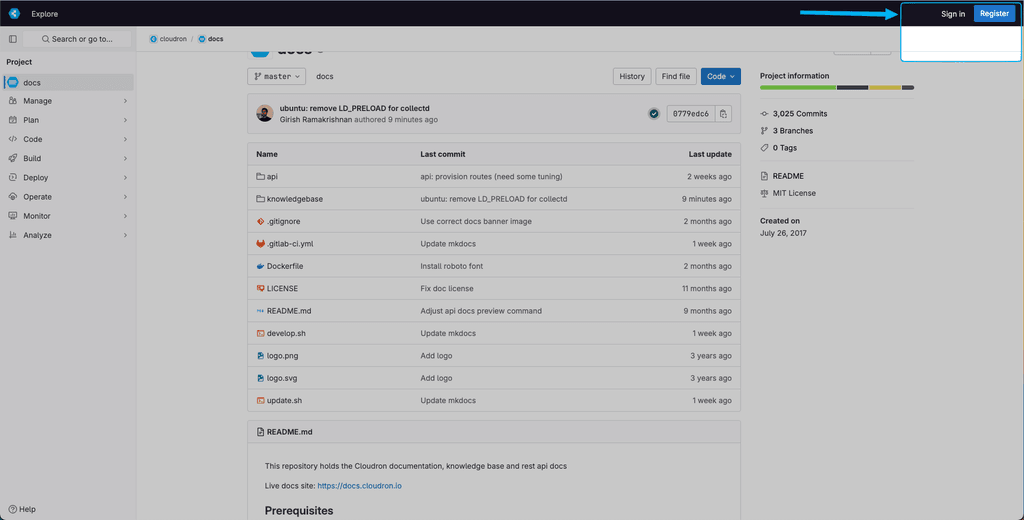
    I looked at https://git.cloudron.io/cloudron/docs, and it doesn't provide a "Contributing" section or Contributing.md about how to provide a contribution.

    It would help external contributors to get started autonomously while ensuring we're following the expected procedure. Right now, I'm a bit at a loss with how to contribute. Do I need to create an account? Should I just clone (or fork?) and just create a branch? I don't see where Pull Requests are located.

    Plenty of questions that could be addressed with a short guide 😉

    485030f5-13de-4c42-9540-cc3c8ae0dff2-image.png


  • Emailing notifications of certain crucial system events, such as full disk space
    A AmbroiseUnly
    Feature Requests notifications

    For anyone interested in configuring proper monitoring on your Cloudron server, I wrote a guide about it, and I hope you'll find it useful! 🙂

    It's the kind of guide I wish I would have found when first looking at this topic.

  • Login

  • Don't have an account? Register

  • Login or register to search.
  • First post
    Last post
0
  • Categories
  • Recent
  • Tags
  • Popular
  • Bookmarks
  • Search